
When tears don’t ask for permission
Sometimes creating is crying while standing — a quiet act of resistance when everything in us wants to stop.

Even in tears, art still breathes.
Some days, the soul decides to cry before I understand why.
The tears arrive unannounced,
without a name,
without an explanation that fits into words.
They fall from exhaustion,
from the absence of return,
from the weight of creating in a world that doesn’t always listen.
And I let them.
I let them wash what courage can no longer reach,
undo the knot tightened by silence.
Because maybe crying is also a way to continue —
a quiet form of resistance
when everything in me wants to give up.
Tomorrow I might stand up again.
Not out of strength,
but out of loyalty to something in me
that insists on existing.
Even tired.
Even without applause.
Even in tears.
👉 Artistic moral of the day: sometimes, creating is crying while standing.
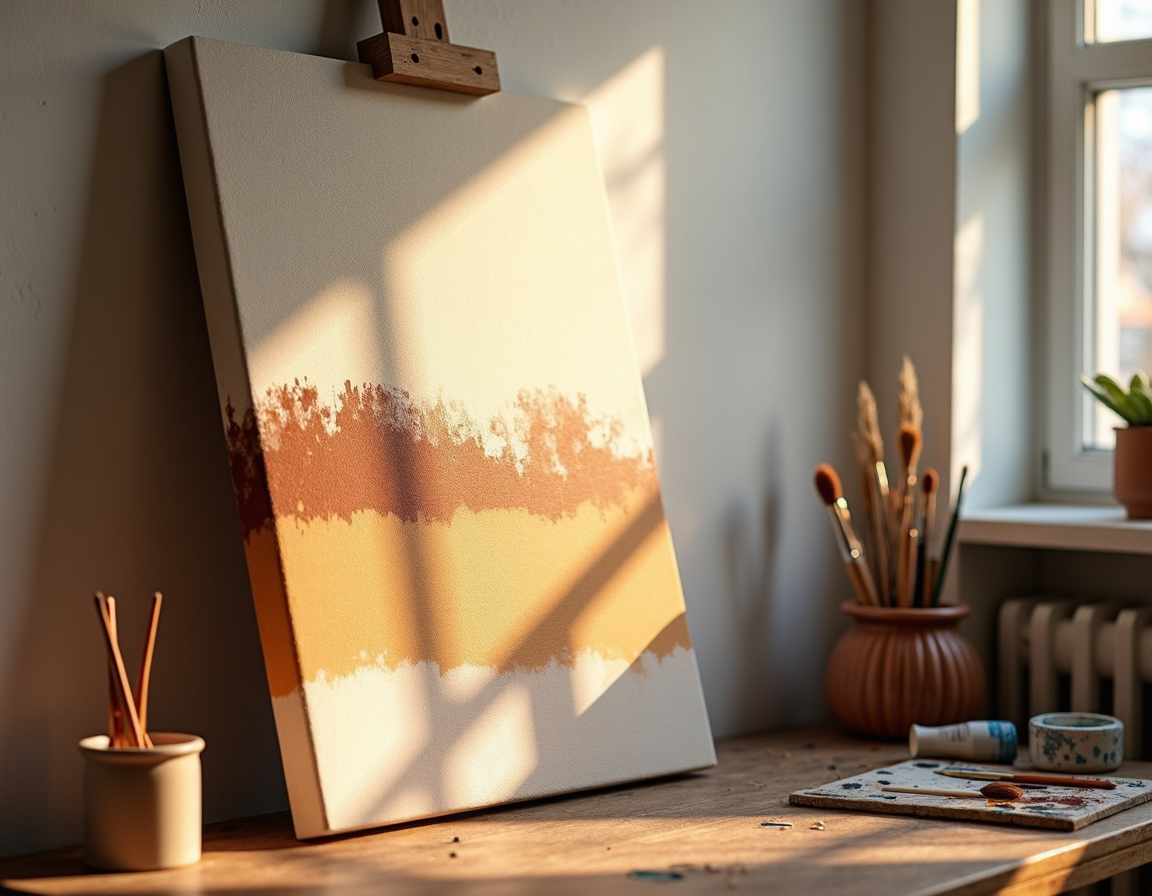
Art as a form of presence
Art isn’t escape — it’s presence. The gesture that says “I’m here”, even in silence.

Where the gesture remains, even after you leave.
“Art does not reproduce the visible; it makes it visible.” — Paul Klee
Some people paint to escape.
I paint to stay.
Art, deep down, is a form of presence — not representation.
It’s the gesture that says, “I’m here”, even when words fail.
When you paint, write, or sculpt, you’re suspending time.
Not to run away from the world, but to touch it differently — through your hands, your gaze, your silence.
Art doesn’t solve anything.
But it gives shape to what we feel, and sometimes, that’s enough.
Being present isn’t just being somewhere.
It’s being whole in the moment — body, breath, color.
And art might be the last place where that’s still possible.
👉 Café conclusion: to create is to say “I’m still here”, even when everything else goes quiet.

When painting asks for silence
When painting asks for silence, gesture learns to listen before it speaks.
Silence has color too.
“There’s a moment before every gesture — that’s where painting breathes.” — HMad
Some days, the studio asks for silence.
Not the comfortable kind, but the heavy one — the silence that forces you to stop.
The city’s noise stays outside, and even the brushes seem to wait for something you can’t name.
You open a tube of paint, but it’s not color you’re looking for — it’s the air between colors.
Painting sometimes asks for pause.
It wants time to listen to what you haven’t said yet.
And if you insist on rushing the gesture, it goes quiet.
There’s humility in accepting that silence.
Because, really, that’s where the work begins — before it exists, before it’s yours.
👉 Café conclusion: silence is a tool too — it just doesn’t fit in the paint box.

The power of emptiness in visual arts
Emptiness isn’t absence — it’s where art breathes.

Where silence becomes visible.
“Nothing is not a hole; it’s a field of possibilities.” — John Cage
Some people fear emptiness — the silence, the blank space, the pause.
But in visual arts, emptiness is anything but absence: it’s the place where the work breathes.
Malevich painted his White on White as if to say, “I no longer need anything for something to exist.”
Rothko immersed us in color fields that are really portals of silence.
And Agnes Martin proved that delicacy can be as radical as the most violent gesture.
Emptiness isn’t a lack of expression.
It’s the moment before the word, before the color — that fragile instant when the eye is still learning how to see.
In the end, emptiness is where everything begins.
Without it, gesture has nowhere to land, and thought has nowhere to echo.
👉 Café conclusion: emptiness isn’t the opposite of art — it’s its breath.

Small mistakes, big beginnings
From First Expressions to Minimal Expressions / Maximal Statements: a journey from gesture to synthesis, between November and December.

The beginning of a language still reinventing itself.
“Art lives off accidents too — sometimes the calendar takes the lead.”
The Restaurante Galeria recently shared the poster for my exhibition First Expressions.
Everything’s right — well, almost. Just one tiny detail: the month.
The show actually changes in December, not November.
But even that small mistake made sense — because what’s coming next is, in truth, a natural continuation.
First Expressions gathers my first explorations in Abstract Expressionism — raw color, instinctive gestures, energy still finding its rhythm.
Now, in December, comes Minimal Expressions / Maximal Statements, where those impulses evolve — more contained, more deliberate, but still alive.
Between one and the other lies a journey: from explosion to synthesis, from gesture to structure, from urgency to silence.
Same language — just spoken differently.
👉 Café conclusion: sometimes even the calendar’s mistakes help tell the right story.
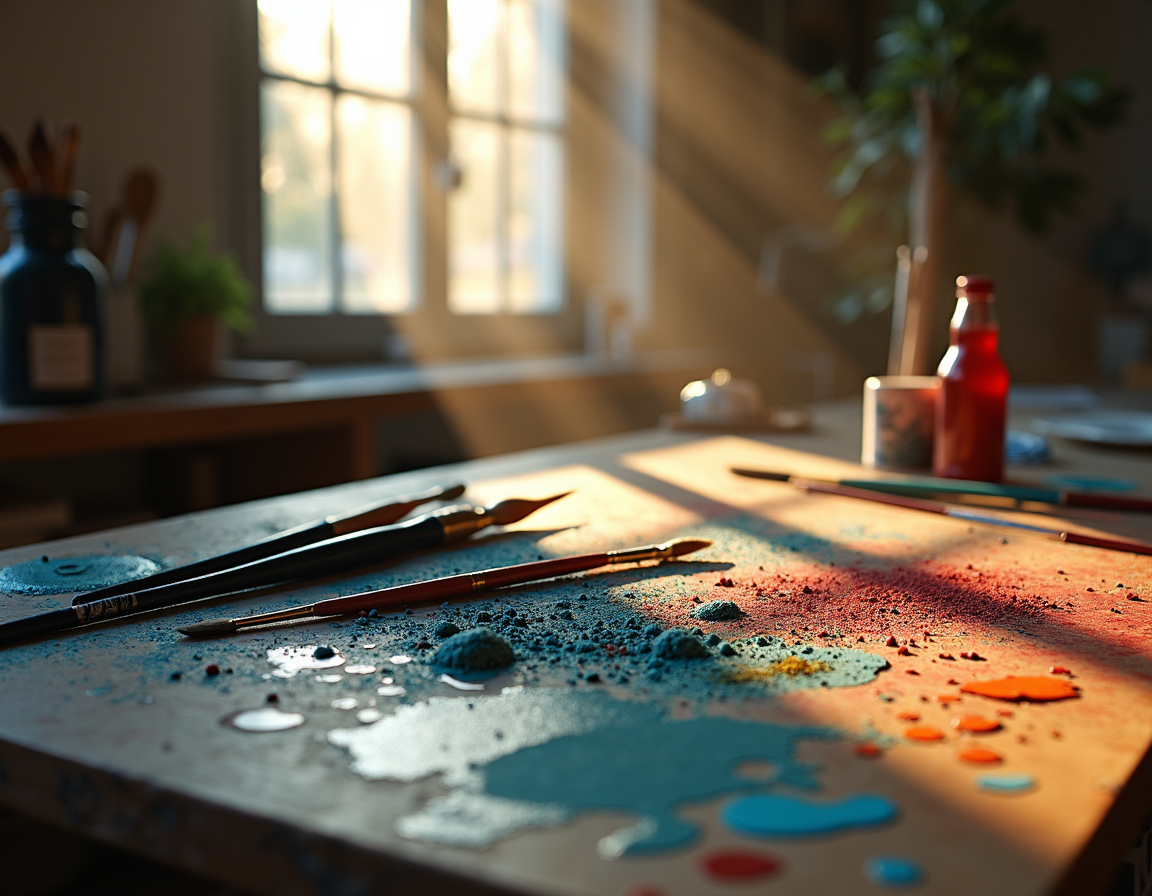
Between silence and pigment
A brief return: the studio spoke louder, and silence turned into creation.

After the noise, the studio’s silence remains.
“There are times when silence is the only way to work.” — HMad
It’s been a while since I last wrote here. My bad.
But sometimes the studio speaks louder — and the blog just has to wait for its turn.
The work for the exhibitions ended up multiplying: one in November, another in December.
Two fronts, two tempos, and the same pair of hands trying to keep up.
Between canvases, color, and cold coffee, time simply vanished.
But that’s a good sign — it means the materials took over, and silence turned into creation.
👉 Café conclusion: I wasn’t gone — I was just busy shaping the right kind of noise.
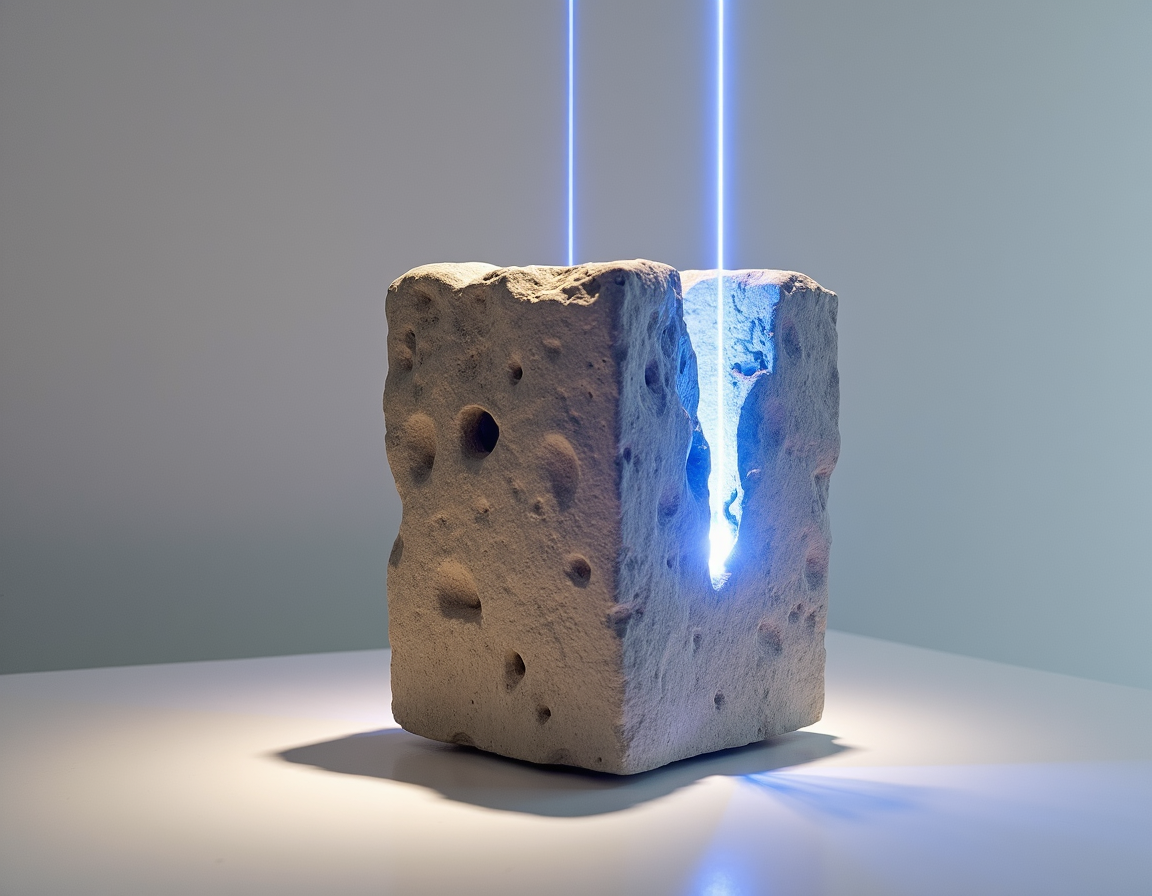
The Evolution of Sculpture: From Ancestral Clay to Contemporary Installations
From the will to sculpt a god in marble to the desire to create a question in space, sculpture has evolved, but its central impulse remains intact.
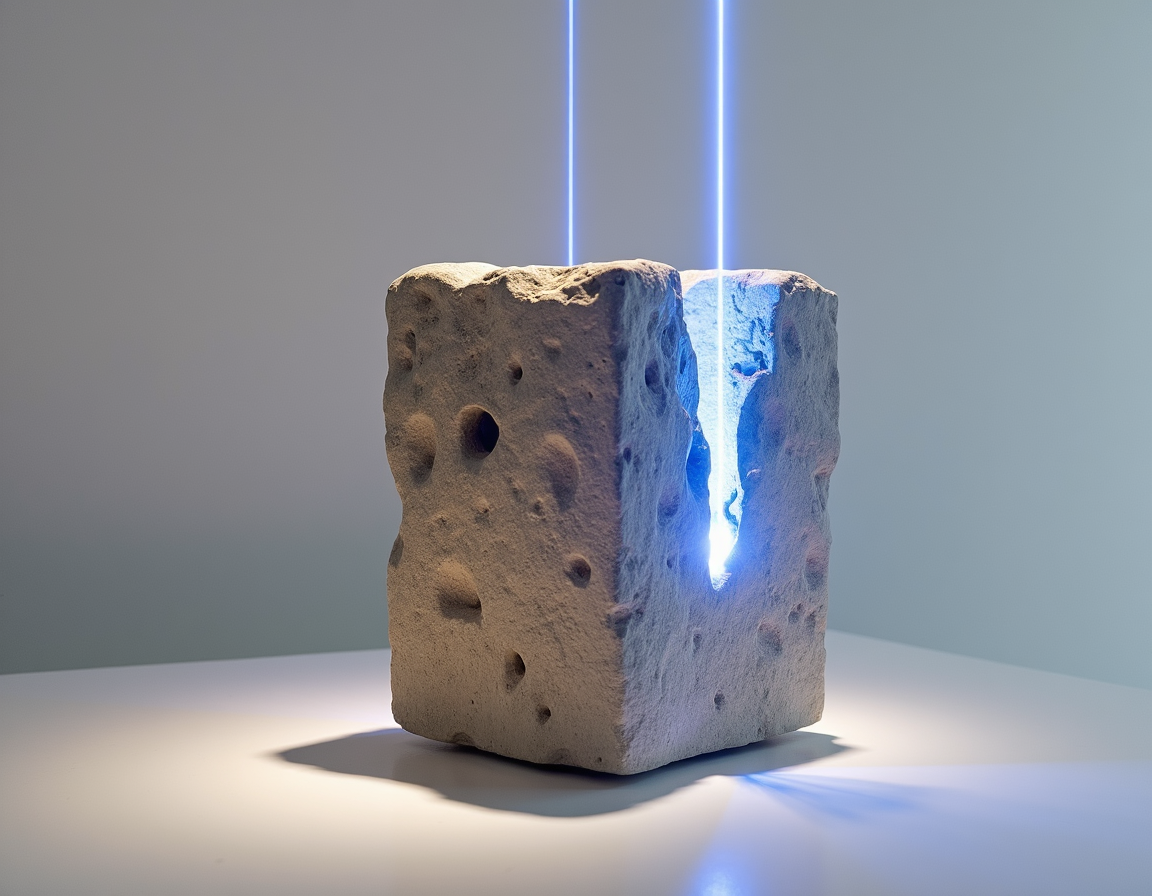
"Sculpture is the art of the intelligence."
— Pablo Picasso
Think of the first sculptor. Not an artist, but a human who picked up a handful of clay and, driven by an impulse they didn't even understand, left the mark of a finger on it. That small indentation, made with no apparent utility, was the first revolution.
Sculpture was born from that tactile relationship with the world. From clay to stone, then to bronze. It was the urge to make the ephemeral permanent, to give form to the invisible. Gods, kings, heroes. The material was heavy, the work was physical, eternity was the goal.
And then? The mission changed.
The Great Shift: From Representing to Questioning
Classical sculpture wanted to answer. Contemporary sculpture prefers to ask.
It's no longer just about mastering material to create a beautiful or powerful form. It's about challenging the very idea of what a sculpture is. Can it be an installation made of light and shadow? Can it be a found object from the street? Can it be an immersive experience that only exists while you, the viewer, are inside it?
Marble gave way to plastic, glass, digital data. The tool is no longer just the chisel, but code, the sensor, the concept.
The Invisible Thread
It seems like a total break, doesn't it? From the clay idol to the data cloud.
But look again. The common thread is there. It's that very same impulse from the first human with the clay: the desire to touch the world and leave a mark. Be it a groove in the clay, a fold in corten steel, or a point of light in an empty space.
Sculpture remains the art of space, volume, and presence. It's just that now, instead of showing us a god, it invites us to think about what a god is. Instead of imposing a narrative on us, it offers us a space to imagine our own.
It's less about monuments. And more about moments. Less about eternity. And more about the now.
👉 Bottom line: Sculpture no longer asks "what do I represent?", but rather "what do I provoke in you?". And that is its greatest evolution.
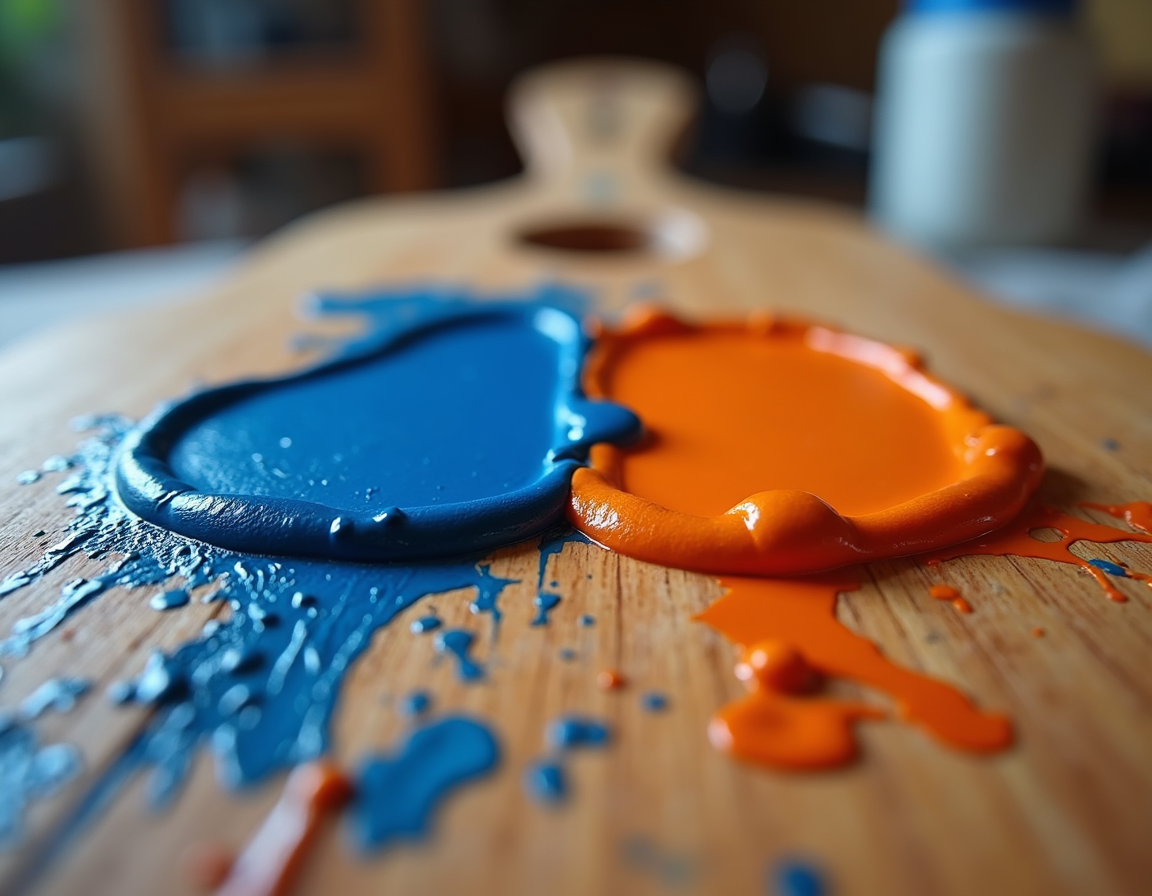
The Colours That Fight With Each Other
Colour theory is one thing. The dramatic relationship between colours on an artist's palette is another, far more entertaining one.
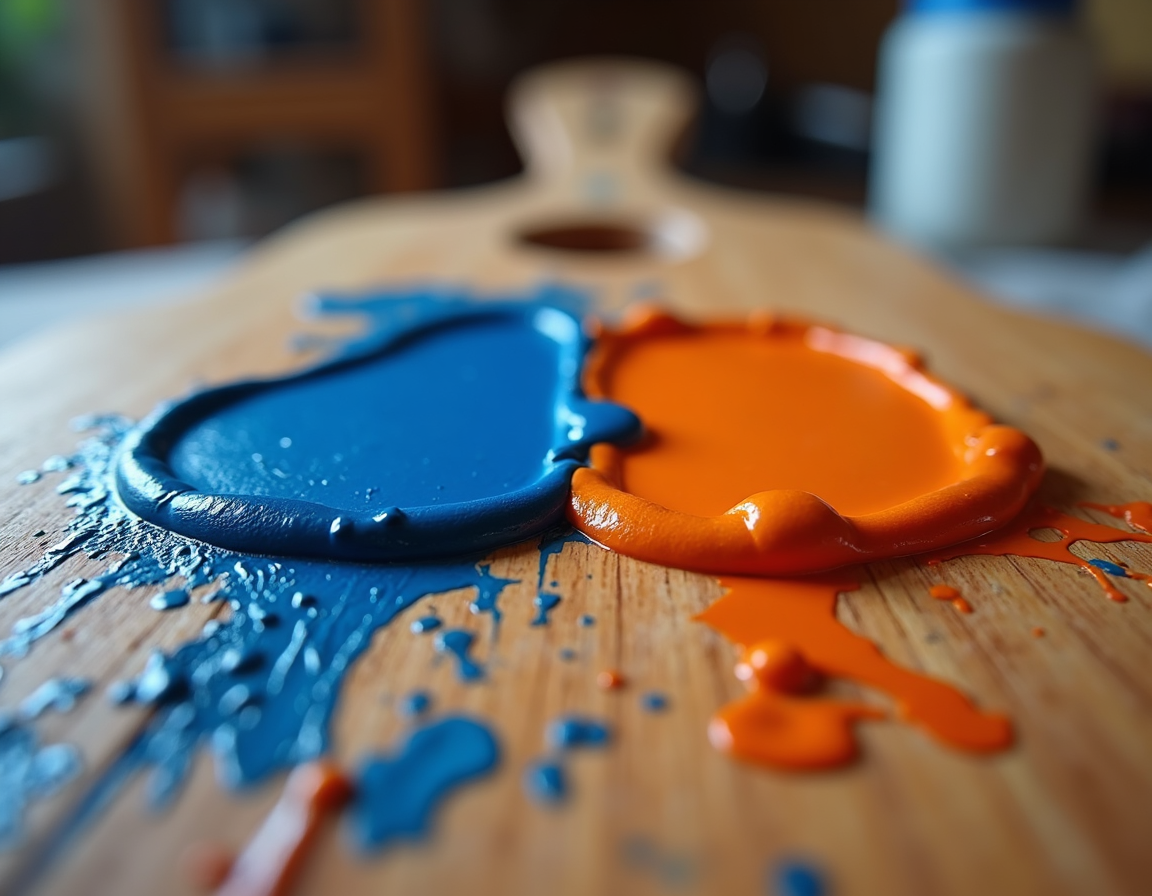
"Colours, like features, follow the changes of the emotions."
— Vincent van Gogh
Colour theory is clear. It talks about complementary colours, harmony, and contrasts that balance each other. All very beautiful.
The artist's heart, however, is a different matter.
There are colours that, on paper, are a dream team. But on the canvas, they're like two cousins at a family party actively avoiding each other. Lemon yellow thinks purple is too dramatic. Green finds red an unbearable show-off.
And then there's the biggest drama of all: blue and orange. Theory says they're complementary, the perfect couple. The reality on the canvas? It's a live couples' argument. One wants to be the serene sky, the other wants to be the explosive sunset. And in the middle is the poor artist trying to play marriage counsellor.
In the end, the canvas is the real therapy room. It's where colours can afford to hate each other, to scream at one another, and where that fight, believe it or not, creates the most beautiful thing of all: life.
👉 Café conclusion: On the canvas, as in life, the best stories always come from the most colourful conflicts.
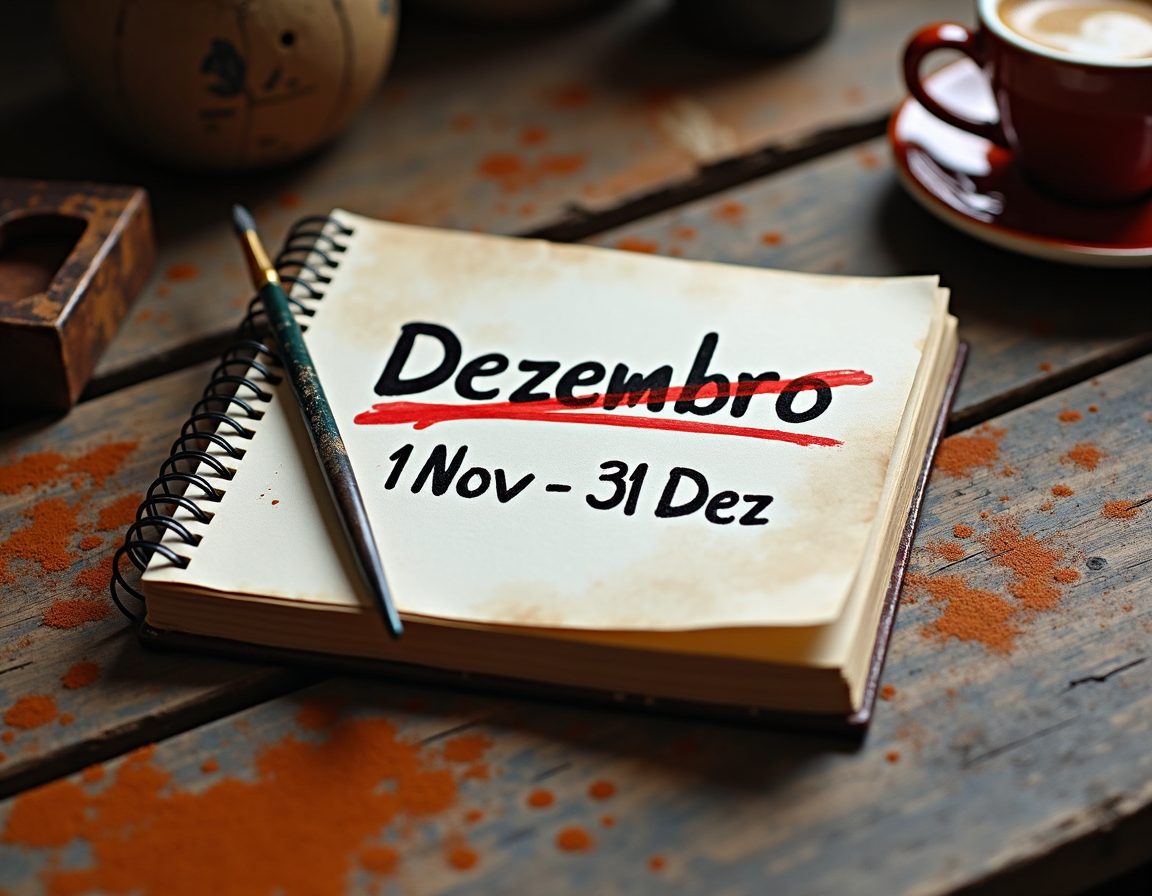
The Exhibition is Arriving Earlier (And It's Staying Longer)
My next exhibition has been brought forward to November 1st and extended until December 31st. A creative sprint ahead.
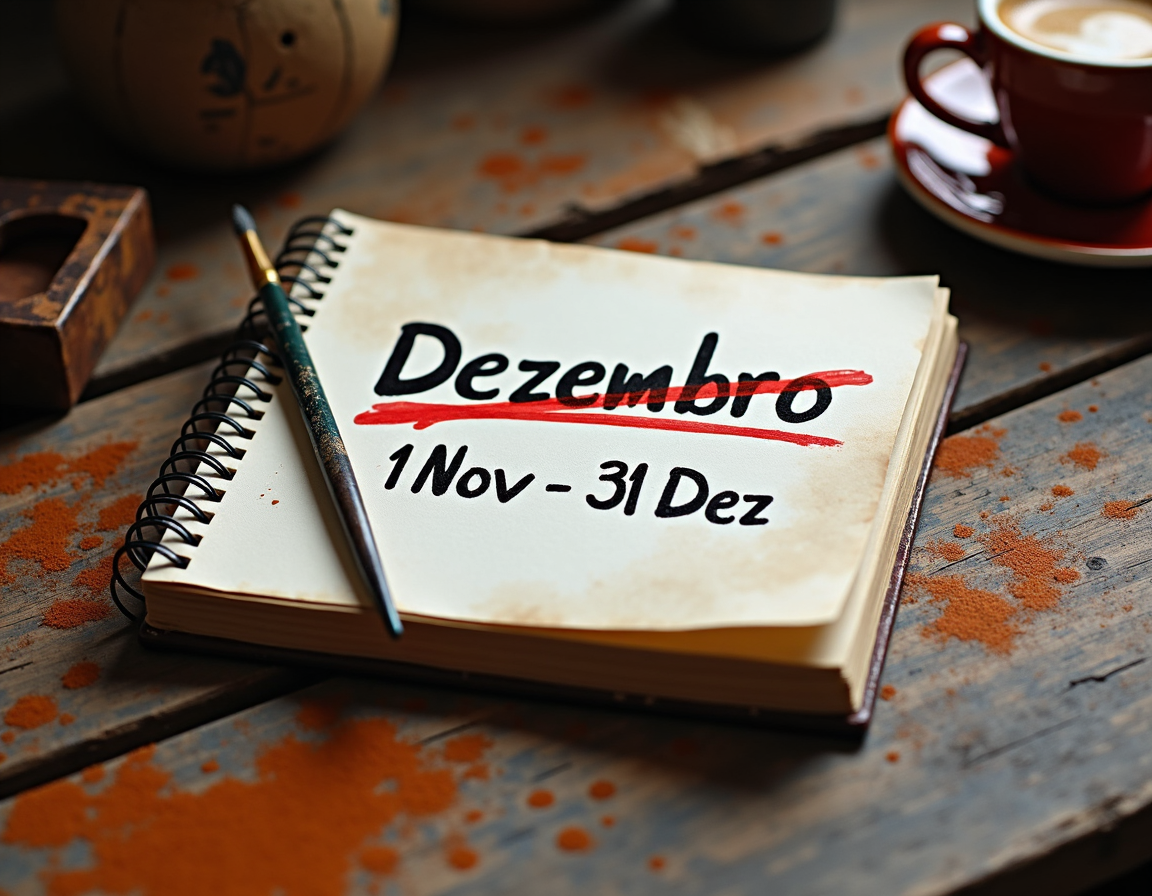
"Art, like life, happens at its own rhythm.”— HMad
Well, then. The exhibition that was scheduled for December has decided to take a leap in time.
The gallery called with news. The opening has been brought forward and the duration expanded. The new map is this: the exhibition opens on November 1st and closes on December 31st. Two full months, instead of one.
This completely changes the creative landscape.
And, contrary to what one might think, it hasn't become a marathon. It's become a sprint. A shorter, more intense sprint to have everything ready for November 1st. The adrenaline is different. The pressure too. But the reward is clear: having these two full months, capturing the unique energy of both November and December.
As for what I'm preparing? That conversation is for the coming weeks. The certainty is that the new timeline is injecting a new, urgent energy into the canvases.
Keep checking in here. The news will come as soon as I have it.
👉 Everything else is just café chatter: A sprint now for a long conversation later. The plan is a good one.
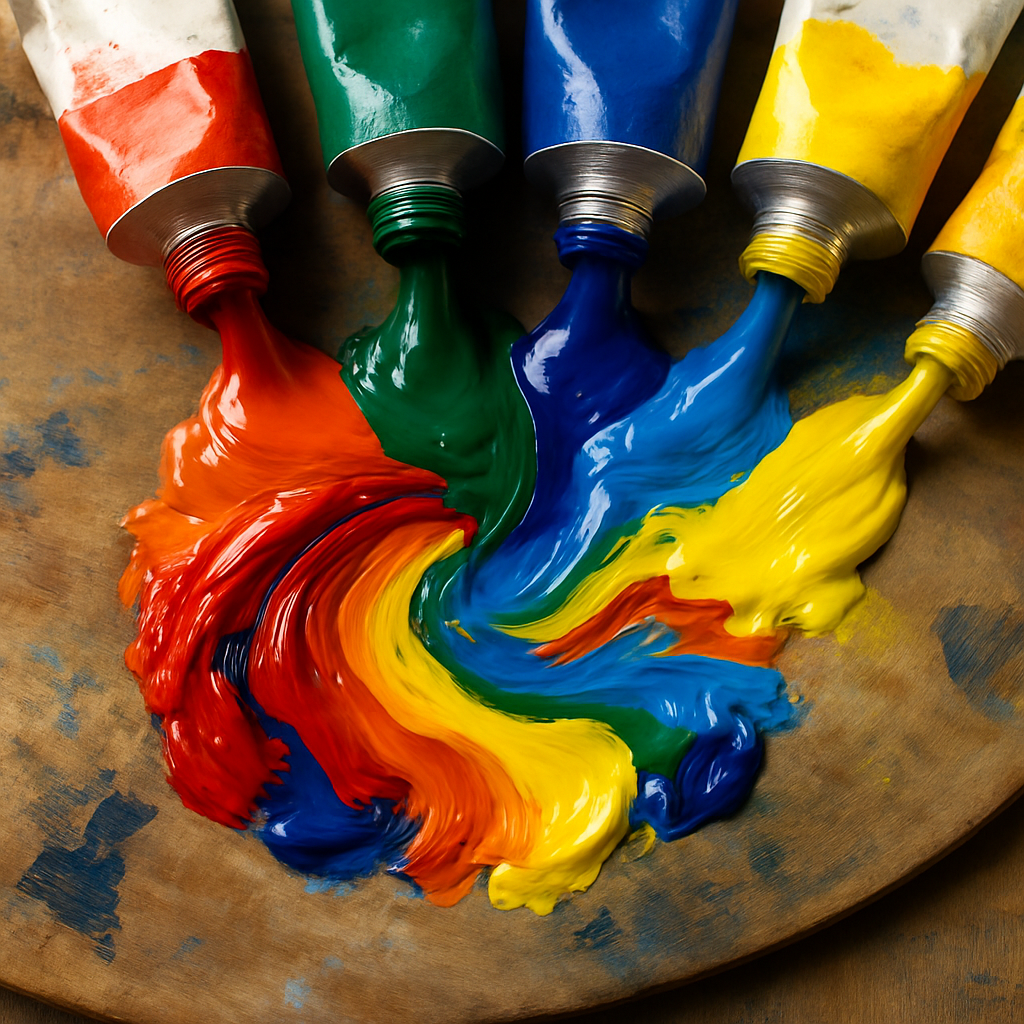
5 contemporary artists who reinvented the use of color
Five contemporary artists who turned color into language, experience, and attitude.

Paint tubes in a chromatic revolt.
“Color is the place where our brain and the universe meet.” — Paul Klee
People always bring up Van Gogh, Matisse, and Rothko when talking about color. But what about today’s artists? They’re not living in the shadows — they reinvent color as language, experience, even provocation. Here are five names worth dropping at your next artsy dinner.
Olafur Eliasson
He doesn’t paint, but he paints with light. His installations turn rooms into artificial sunsets and fogs of color. For him, color isn’t pigment: it’s atmosphere.
Anish Kapoor
If you’ve seen that black that swallows your gaze (the infamous Vantablack, and all the drama around it), you know what I mean. Kapoor doesn’t use color as decoration, but as pure power.
Yayoi Kusama
Polka dots, mirrored infinities, and rooms straight out of a pop delirium. Kusama turned color into repetitive obsession — and in that, found freedom.
Sean Scully
Looks like “just” geometry, but it’s poetry in blocks. His stripes breathe, vibrate, almost move. His abstraction is warm, not clinical.
Cecily Brown
She paints like diving into chaos. Colors explode, blur, and collide in furious gestures. Painting that doesn’t ask for permission to enter.
👉 Bottom line, with paint still wet: color has never been just aesthetics — it’s attitude. These five prove it can still be reinvented with every generation.

The creative drama: wood dust and stubborn faces
Between dust, tools, and stubbornness, matter always reminds the artist who’s in charge.

Between dust, tools, and stubbornness.
Sometimes the studio feels like a courtroom: I argue, the wood objects. I imagine fluidity, it insists on throwing back edges.
The result is here — among dust, tools, and a stern face that came out of the block almost out of stubbornness.
👉 The artsy moral of the tale: the artist never beats matter — he just negotiates temporary truces.
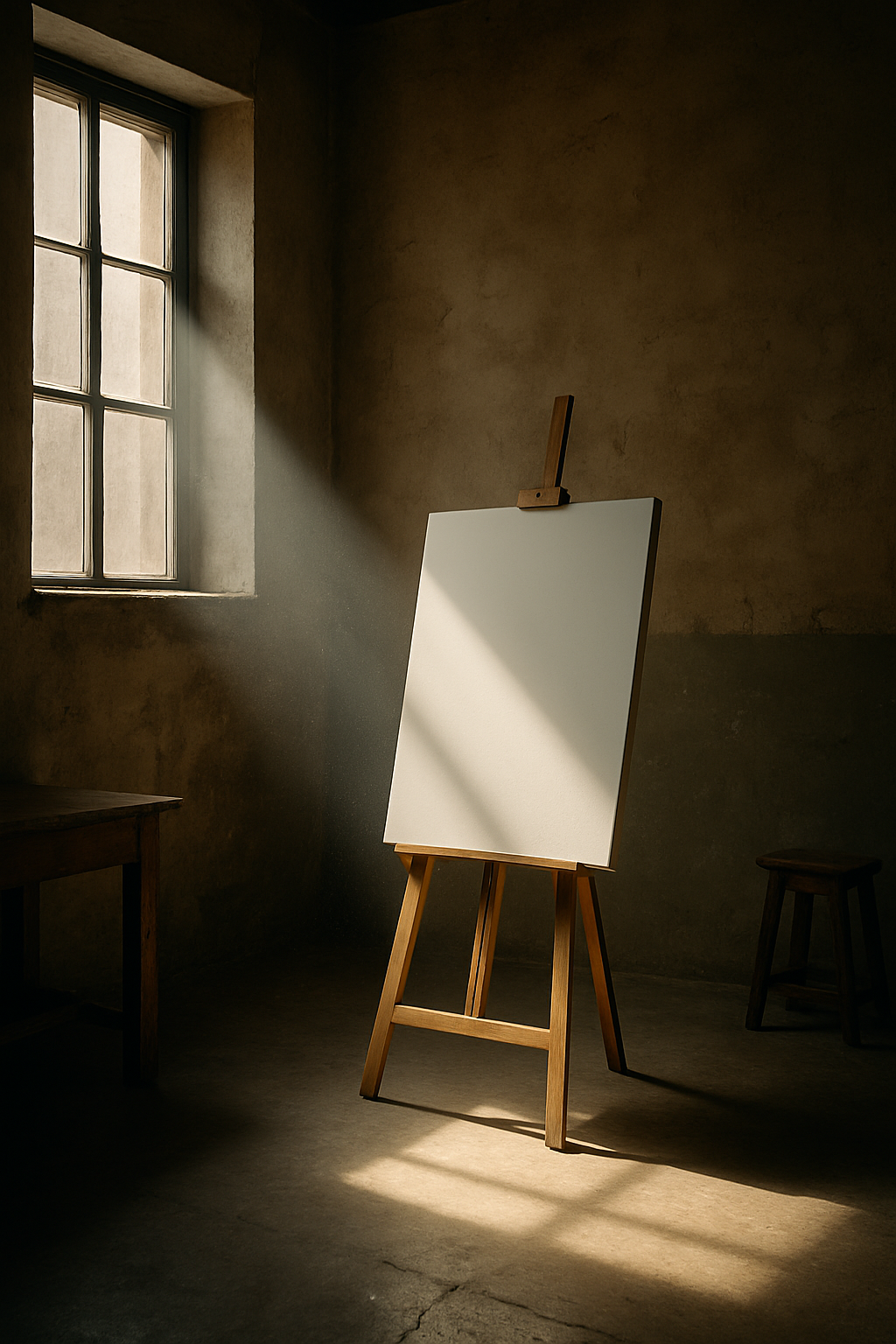
Before the first brushstroke
Painting doesn’t start on the canvas, but in the silence that prepares the space for it to happen.
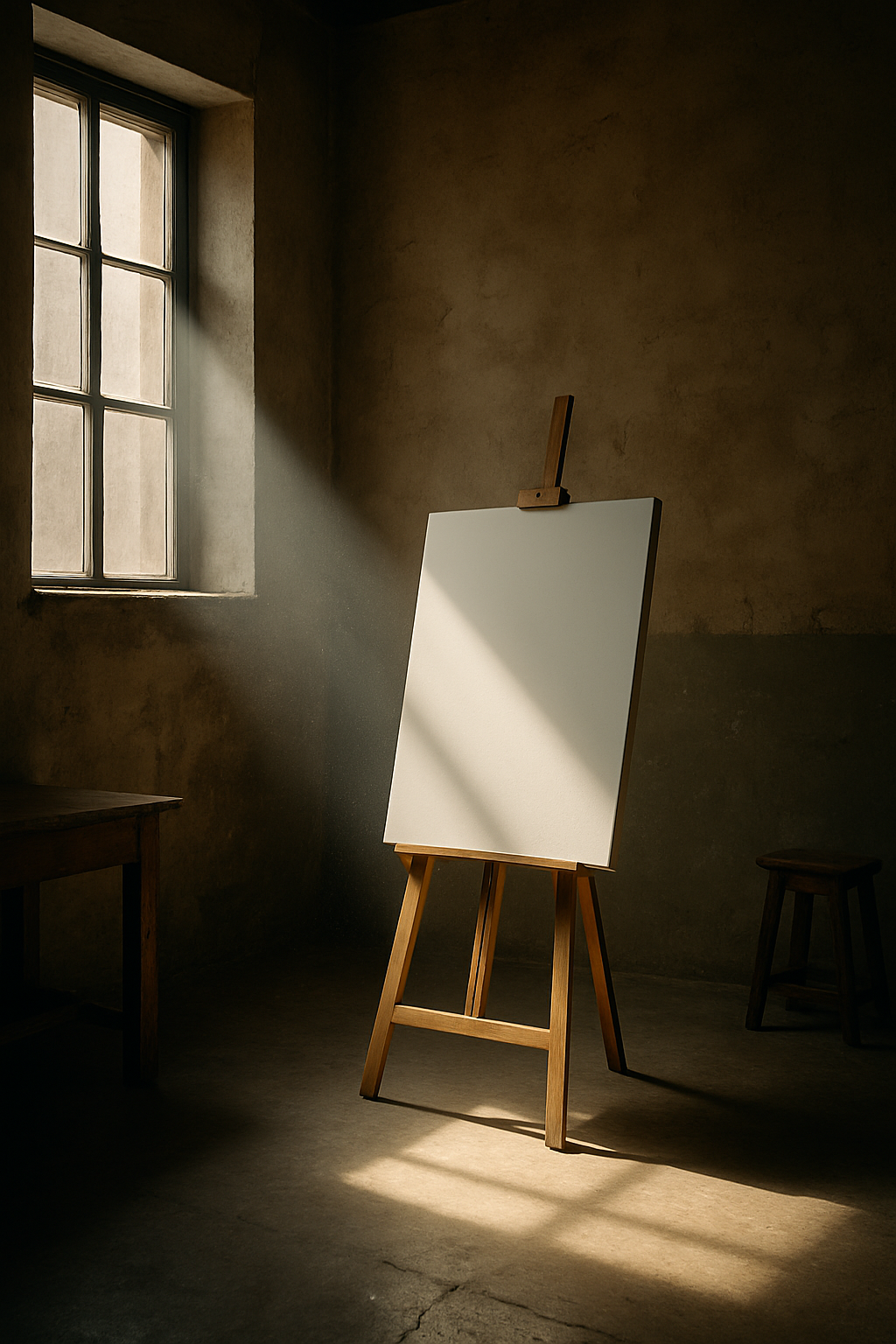
Silence before creation.
“It is not the painter who chooses the painting, it is the painting that chooses the painter.” — Georges Braque
Most people think a painting starts the moment color hits canvas. As if it were instant magic: paint → canvas → artwork.
For me, it starts much earlier. In silence. In emptiness. In that invisible space where the work decides whether it wants to be born.
What comes first
Every series demands its own logic. I’ve seen canvases turn into fragments of memory, into bodies moving, into landscapes to explore. I never repeat the path. Each exhibition forces me to unlearn and invent a new way of thinking.
That’s the risk: walking into a forest I’ve never crossed, with no map, no promise of a way out. And yet — stubbornly hoping there will be light.
Order and chaos at the table
I can sketch plans, fill notebooks with ideas, rehearse in my head. But when the moment comes: color chooses its destiny, gesture takes over, the painting responds. And me? I follow.
It’s in that tense balance between order and chaos that the work reveals itself — and often surprises me more than it surprises you.
The real secret
Maybe the secret is not mastering painting. Maybe it’s just this: preparing the space so that it can happen. Like clearing a path and waiting for the light to break through.
👉 Café conclusion: painting doesn’t begin on canvas, but in the space we open for it to exist. And in December, I’ll be opening that space with you.

Why do we still talk about Van Gogh?
Van Gogh still speaks to us because his painting screams urgency, pain, and beauty — everything art needs.

Vincent van Gogh, “Two Cut Sunflowers” (1887). The Phillips Collection, Washington, Image in public domain by Wikimedia Commons.
“I dream my painting, and then I paint my dream.” — Vincent van Gogh
We talk about Van Gogh as if he were an old friend. And in a way, he is. You know the straw hat, the sunflowers, the ear, the letters to Theo. Even if you’ve never set foot in a museum, you’ve met him.
But why this collective obsession?
Tragedy sells (big time)
Van Gogh is the original rockstar painter: poor, misunderstood, suicidal. He lived in misery, died young, and sold almost nothing in his lifetime. The rest you know — the market and the critics turned him into legend. Culture loves martyrs.
Color that screams
Look at one of his canvases and tell me you don’t hear sound. The yellow of the sunflowers spits light. The starry sky isn’t sky, it’s music in oil. There’s an intensity that cuts across time, almost untranslatable.
The myth of authenticity
In an age of Instagram filters and polished LinkedIn bios, Van Gogh works as a counterpoint. The “mad genius” who didn’t fake it. Who burned from the inside and threw the ashes onto canvas. Truth or romantic construction? Doesn’t matter. It works.
And you?
We still talk about Van Gogh because we need someone to remind us that art isn’t just market, technique, or “good taste.” It’s excess, it’s pain, it’s beauty that disturbs.
👉 Bottom line, with paint still wet: Van Gogh reminds us that for art to be art, it must be urgent.

The most sarcastic quotes about art ever
Five sarcastic quotes about art that cut deeper than most serious critiques.
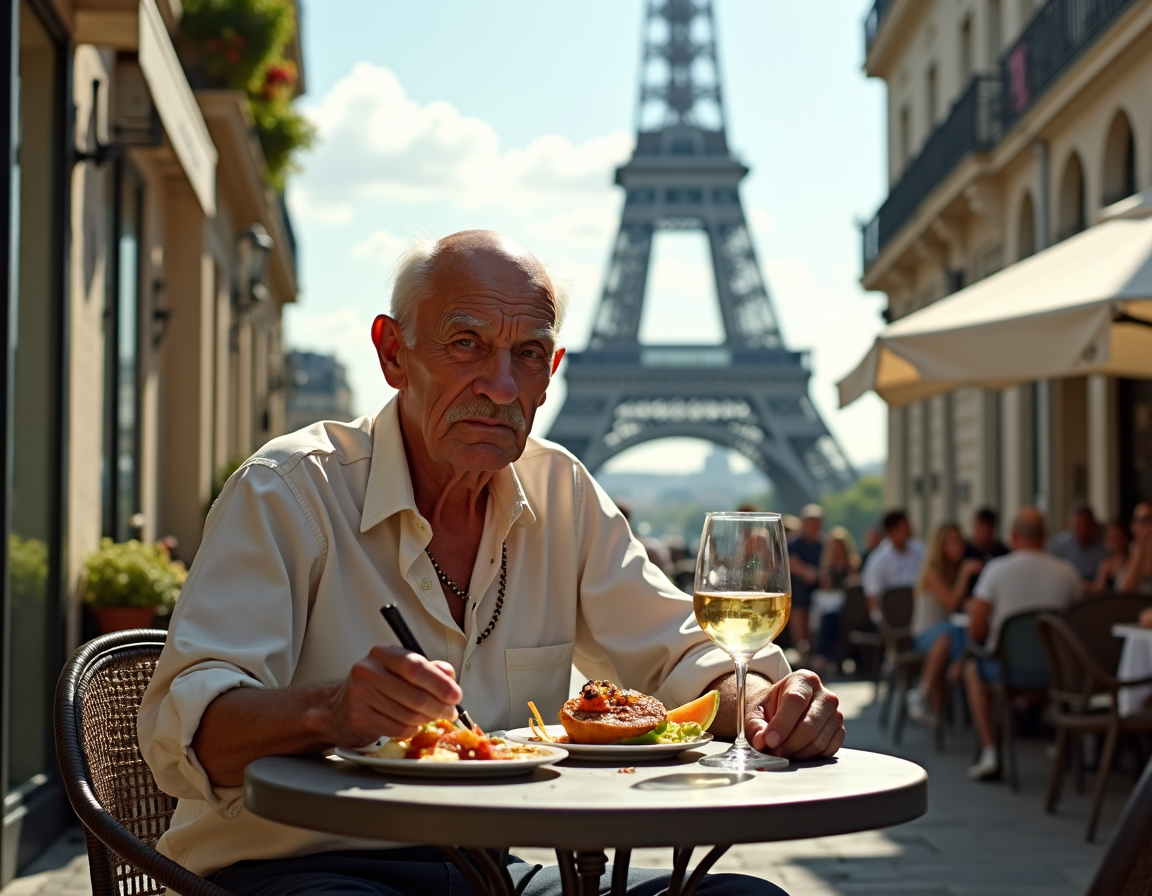
“Forget art, food comes first.”
Introduction
Nothing like a little artistic sarcasm to kick off the week. Here’s a top list of lines that make you laugh… and sometimes cry.
The gems
“Sculpture is what you bump into when you back up to look at a painting.” — Barnett Newman
“Art is the most expensive excuse for avoiding work.” — Georges Braque
“The only thing I care about in Paris is the food.” — Pablo Picasso
“Criticism is like an electric light: it illuminates, but burns if you touch it.” — Salvador Dalí
“An artist is like a snail: carrying his house on his back and leaving a trail.” — Francis Bacon
Closing
👉 Everything else is just café chatter — but with more irony hanging on the wall.

Fresh fragments: early clues of the next exhibition
A fragment straight from the studio: colour, texture and the first clues of December’s exhibition.

“I paint as I breathe.” — Pablo Picasso
Introduction
Friday calls for revelations. Not all of them, of course — any artist worth their salt knows suspense is also raw material. So here it is: the first bite of what’s to come in the next exhibition.
A detail that tells a story
In the photo you see the hand, the fresh paint, the knife carving the canvas. It’s not a pose, it’s process. And if it shows only a corner, it’s because the full work can’t leave the studio yet. Secrets paint too.
The first canvases
They’re growing in thick, almost sculptural layers. Greens that feel like jungle, oranges that wink like fire. Texture begging you to touch it (no, you can’t). It’s the physical side of painting — gesture, body, sweat — that you sometimes forget when all you see is a tidy canvas on a wall.
Why show it now?
Because the exhibition is already breathing, and you deserve a taste. It’s like lifting the lid before the stew is ready: you know it still needs time, but you can’t resist peeking.
Closing
👉 The artsy moral of the tale: this is just the first fragment. Until December, the blog will keep dropping fresh clues.

How to choose between canvas and paper: a simple guide not to get lost in the art shop
A quick, witty, and direct guide to avoid getting lost between canvases and papers at the art shop.

“Art does not reproduce what we see. It makes us see.” — Paul Klee
You walk into the art store. The plan was simple: grab “something to paint on.” Half an hour later you’re still frozen between canvases, smooth papers, textured papers, thick, thin, cheap, pricey… and already considering pretending you forgot your wallet.
Canvas or paper? That is the question
The dilemma is old. Canvas has prestige, instantly screams “serious art.” Paper is democratic, versatile, slips into any folder. Both have their charm — but it helps to know what each is good for.
When to choose canvas
You want your piece to last for decades without yellowing.
You’re working with oil or acrylic (paper suffers with that).
You love the irregular texture that gives depth to color.
You want to hang the work directly, no frame needed.
You need to feel like a “studio painter,” even if just on Sundays.
When to choose paper
You like experimenting with watercolor, gouache, graphite, or pastels.
You enjoy the freedom to tear, glue, fold.
You don’t have room to store canvases (paper stacks).
You want something cheaper for tests or quick series.
You know Picasso sketched on paper too — and it worked out fine for him.
Survival tip in the art store
If you still freeze in the weight-and-texture aisle: buy both. Worst case, you’ll discover you’re a mixed-media artist without even trying.
Closing
👉 The artsy moral of the tale: canvas impresses, paper frees. It’s like choosing between wine and coffee — each has its moment.
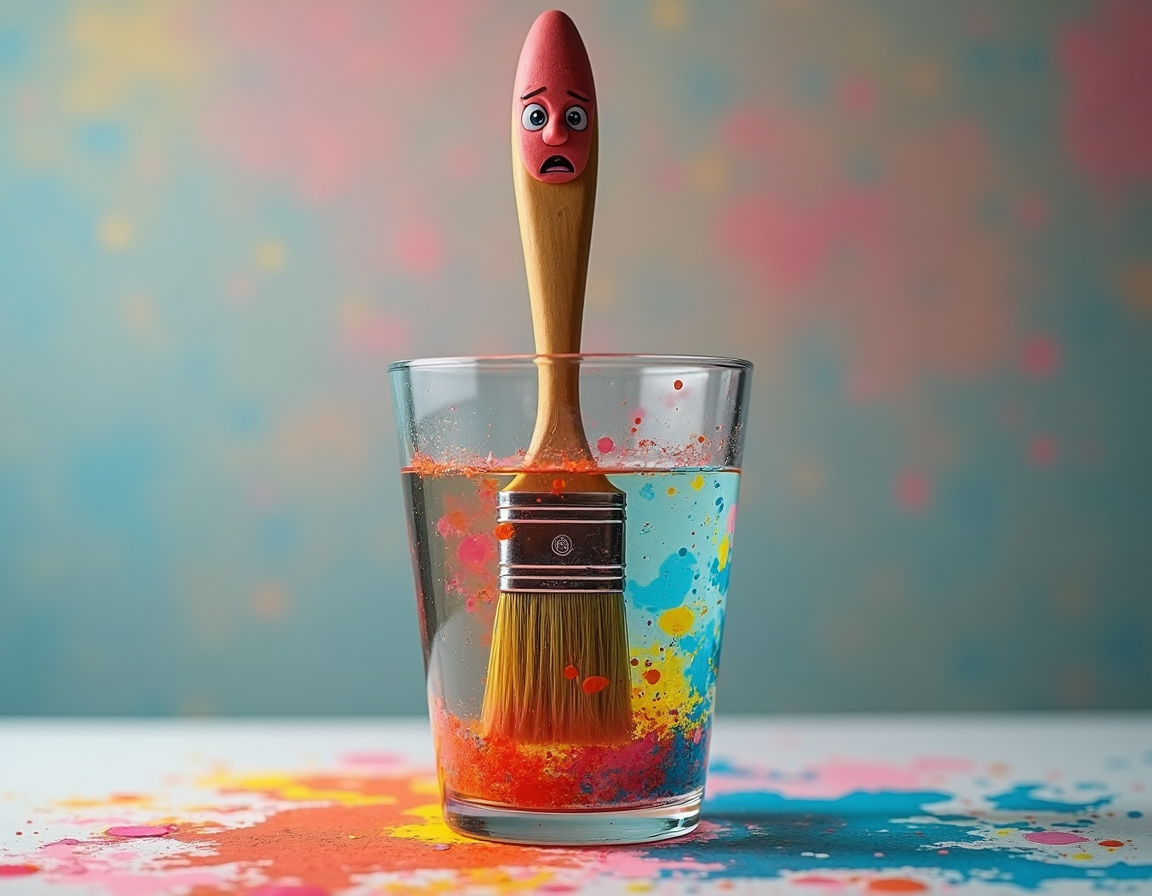
10 things a paintbrush thinks when left in a glass of water
The secret diary of a paintbrush forgotten in water: 10 tragicomic thoughts you’ll never un-hear again.
“Things have a life of their own. It’s simply a matter of waking up their souls.” — Gabriel García Márquez
You forget the paintbrush in the water. For you it’s nothing. For the brush? Pure tragedy. Between bubbles and fading pigments, it’s living a drama no one ever exhibits.
10 soggy thoughts of a forgotten paintbrush
This isn’t a spa, it’s medieval torture.
If I were wine, you’d have saved me already.
I’m dissolving… goodbye dignity.
Oh look, bubbles! … wait, that’s me dying.
That smug toothbrush is laughing at me.
I’m the one who needs therapy here, not you.
When I dry, you’ll cry for every fine line lost.
Should’ve been a pencil… they never drown.
You call this creative process? Looks more like IKEA punishment.
Next time, leave me on the easel… at least I’ll die standing.
Closing
👉 Bottom line, with paint still wet: never underestimate the drama of a soaked brush.

The road to December starts here…
The starting point for December’s exhibition: blank canvases, paint tubes and the promise of what doesn’t yet exist.

The journey always begins with blank canvases and unopened tubes.
Before every exhibition, there’s always this moment.
The canvases are still blank. The paint tubes still sealed. The brushes, way too clean.
It doesn’t look like much, but this is where everything begins: from a pile of materials waiting to turn into color, gesture, and line.
👉 In December, there will be a painting exhibition. Until then, coffee, short nights and a lot of creative chaos will fill the gap between these empty canvases and the gallery walls.
👉 Bottom line, with paint still wet
Every journey begins here — between the silence of unopened canvases and the promise of what doesn’t yet exist.
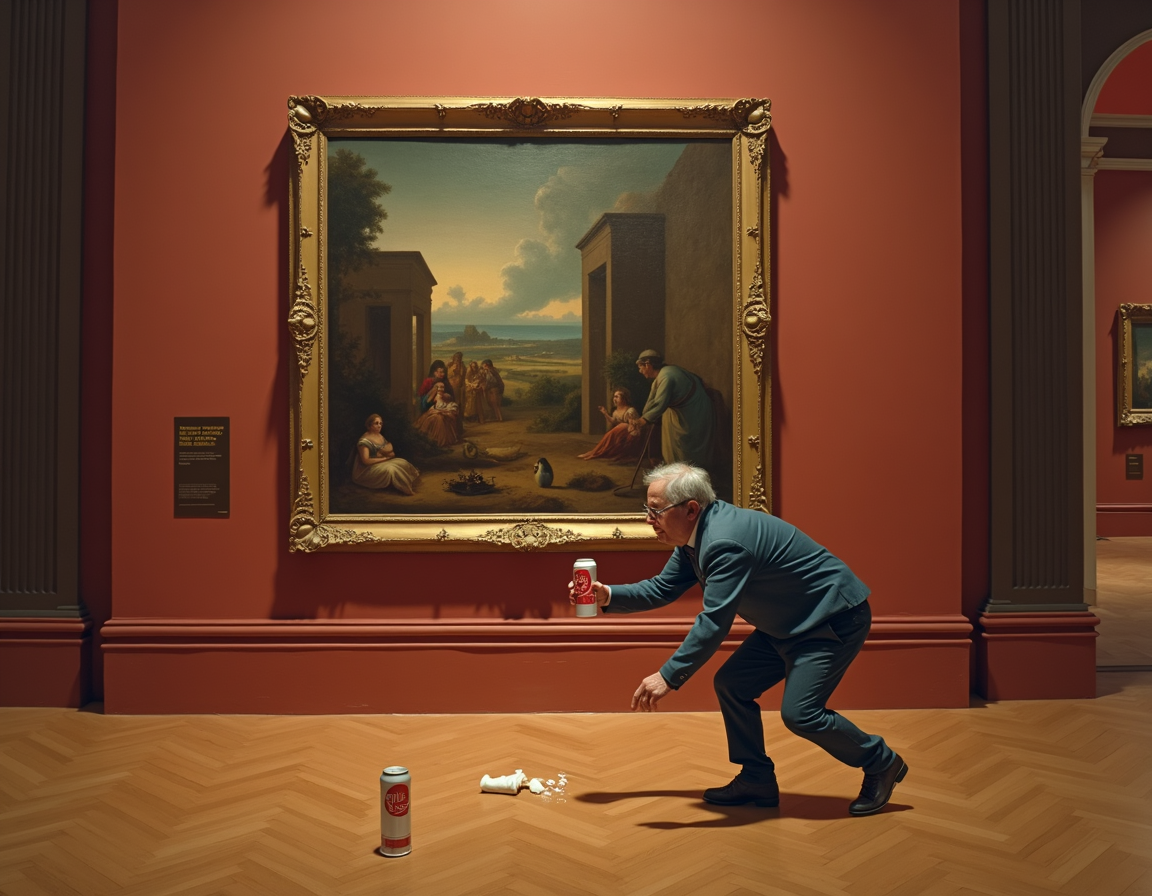
When art was (almost) destroyed by accident
Museum mishaps remind us: even the most untouchable works are at the mercy of human clumsiness.

Disaster was just a breath away.
Even the masters aren’t safe from human clumsiness.
“An accident is just an opportunity in disguise.” — Picasso
Museums are temples of art… but not always immune to human clumsiness. Here are a few delightfully disastrous episodes:
👉 Taipei, 2015
A boy tripped and tore a $1.5 million painting with his arm. Luckily, the artwork was restored — but the mental selfie lasted forever.
👉 Cambridge, 2006
Three priceless paintings crashed to the floor during a lecture — all because someone tripped over a curtain cord.
👉 Moscow, 2018
A visitor tried to take a selfie with a Russian master’s painting. Result: broken frame, but a canvas that was thankfully repairable.
👉 Café conclusion
Genius creates — but chance always leaves its mark…
Hidden stories behind famous paintings
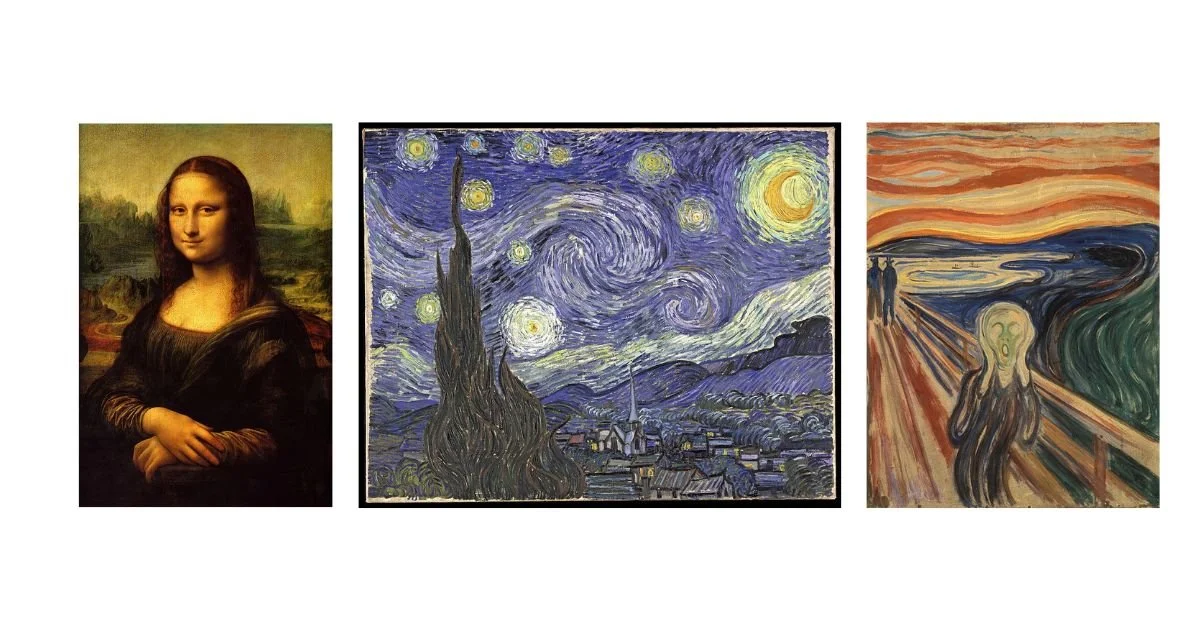
Behind every masterpiece lie secrets, thefts, and chaotic lives. Discover the hidden stories of the Mona Lisa, The Scream, and The Starry Night.

Eternal paintings, stories not always visible on the surface.
“Every painting has three stories: the one the artist painted, the one the critic invented, and the one you see.” — Anonymous
Famous paintings seem familiar — you see the image, you recognize it instantly. But behind the surface lie secrets, accidents, and even scandals that don’t usually fit in museum captions.
👉 The Mona Lisa that almost vanished
Before it was the most famous painting in the world, the Mona Lisa was… stolen. In 1911, a Louvre employee tucked it under his coat and took it home. It was missing for two years. Ironically, that “theft of the century” is what turned it into a global icon.
👉 Munch’s Scream that lived through chaos
Edvard Munch described his work as “a scream of nature.” But few know he painted several versions — and one was stolen at gunpoint in Oslo. When it was finally recovered years later, it was damaged. Even the painting itself seems to have lived the despair it depicts.
👉 Van Gogh and the solitary star
“The Starry Night” is now a symbol of poetic hope. But Van Gogh painted it while confined in an asylum, staring at the sky through barred windows. The image that calms us today was born in one of the stormiest moments of his life.
👉 Hidden stories = living art
These backstage stories don’t diminish the works. On the contrary: they make them more human. They remind us that even the “eternal” masterpieces are made of flaws, accidents, and chaotic lives.
👉 The artsy moral of the tale
Behind every famous painting there’s always a hidden story — and that’s what makes them inexhaustible.